How Your Menstrual Cycle Changes in Perimenopause - and Why tracking It Matters

Perimenopause is not a single moment—it’s a multi-year hormonal transition that unfolds in stages. One of the earliest and most reliable clues that you’ve entered this phase is a change in your menstrual cycle.
www.helloclue.com


Understanding how your cycle is changing can help you:

  • Identify where you are in the menopausal transition

  • Understand the hormonal patterns driving your symptoms

  • Choose the most appropriate treatment strategy for your body

  • Decide whether testing may be helpful (especially if you don’t bleed due to an IUD)

Let’s break down what’s normal, what’s not, and how tracking can guide care.


The First Sign of Perimenopause: A Changing Cycle

In your reproductive years, your cycle is typically predictable—often within a 2–4 day window each month.

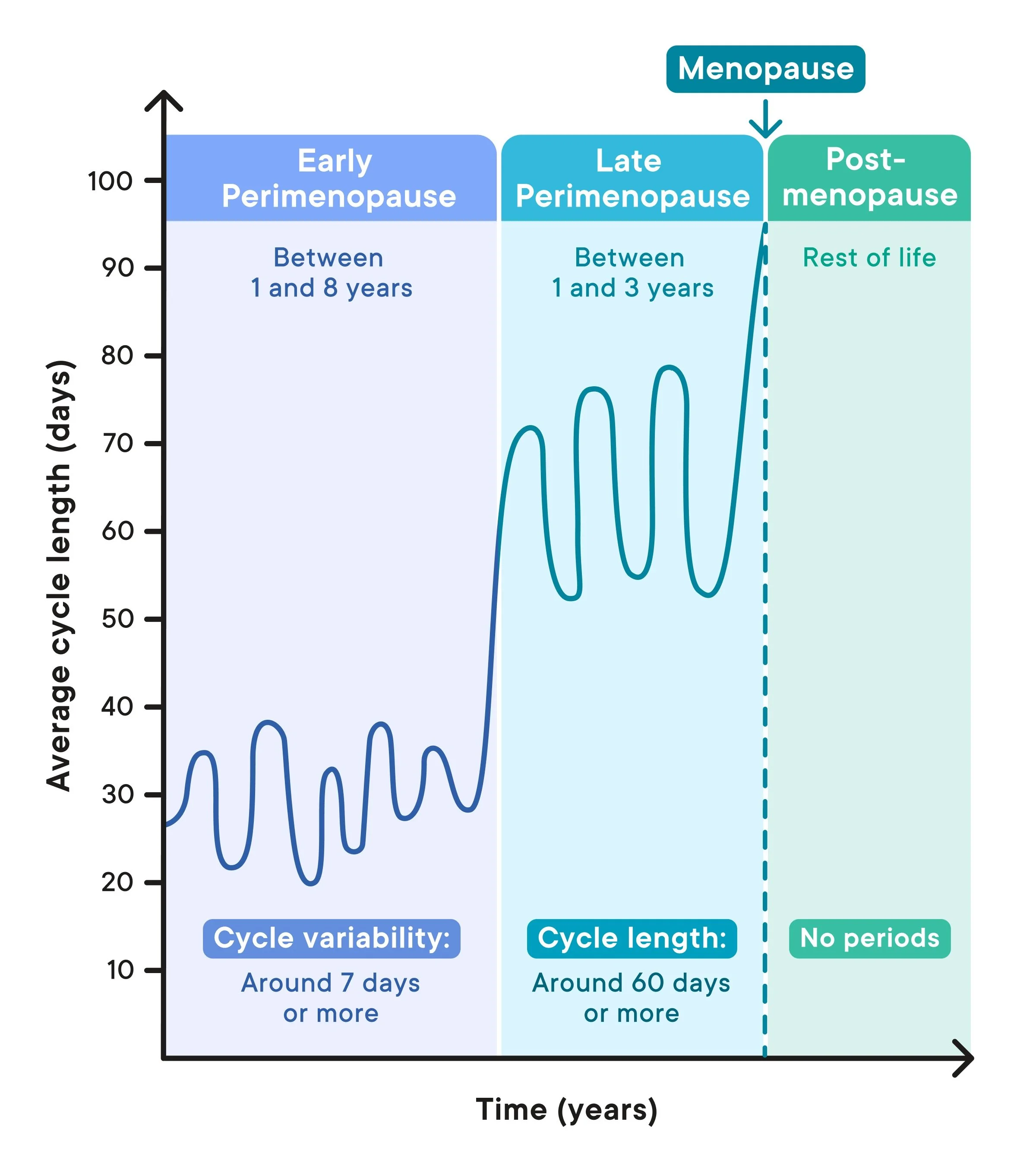
In early perimenopause, the defining change is:

A cycle that shifts by 7 days or more—earlier or later—compared to your usual pattern.

This may look like:

  • A period arriving 7–10 days earlier than expected

  • A cycle that suddenly stretches 1–2 weeks longer

  • Month-to-month unpredictability

This is often driven by inconsistent ovulation, fluctuating estrogen, and rising progesterone deficiency.


Later Perimenopause: Longer Gaps Between Periods

As you move further into the menopausal transition, the ovaries begin to respond less consistently to brain signals.

In later-stage perimenopause (which may last 1–3 years), you may notice:

  • Skipped periods

  • Cycles that stretch beyond 60 days without bleeding

  • Heavier or prolonged bleeding when periods do return

At this stage, hormone fluctuations are more extreme, and symptoms such as hot flashes, sleep disruption, anxiety, and heavy bleeding often intensify.


Why Cycle Tracking Is So Powerful

Tracking your cycle is not just about dates—it helps determine:

1.  Where you are in the transition

  • Shorter or variable cycles → earlier perimenopause

  • Long gaps (>60 days) → later perimenopause

2.  Which treatment options may be most supportive

For example:

  • Heavy + more frequent periods
    → often seen in early perimenopause
    → a hormonal IUD may be a helpful option if blood loss is leading to other issues and can’t be controlled naturally - ie. anemia!

  • Heavy + infrequent periods
    → often seen in later perimenopause
    → an IUD may not be the best fit if the heaviest is infrequent and menopause is now expected in 1-3 years version who knows how many years!
    → other hormone or non-hormonal strategies may be more appropriate


Without tracking, these patterns are easy to miss—and treatment choices may not match your true hormonal stage.


What If You Don’t Get a Period Because of an IUD?

If you have a hormonal IUD and no longer bleed, cycle tracking isn’t possible—but this is when lab testing can help.

FSH Testing in Perimenopause:

FSH (follicle-stimulating hormone) rises as the ovaries become less responsive. In late-stage perimenopause and menopause:

  • FSH levels are often consistently above 25 IU/L

To confirm a menopausal transition when cycles are absent:

  • Two FSH levels >25 IU/L

  • Drawn at least 3 months apart

This can help determine:

  • Whether you are still in perimenopause

  • Whether you may be transitioning into menopause

  • Which therapies are safest and most appropriate


The Takeaway

Your cycle is one of your most valuable hormonal data points.

Whether you’re:

  • Noticing unexpected changes

  • Skipping periods

  • Bleeding more heavily

  • Or no longer bleeding due to an IUD

Tracking (or testing when needed) allows us to:

  • Identify your stage

  • Understand your symptoms

  • And personalize your treatment plan


Perimenopause is not something to “wait out.” With the right insight, it can be navigated with clarity and confidence.
The Core 4: A Simple Formula for Balanced, Energizing Meals

If you’ve ever felt overwhelmed by nutrition advice, you’re not alone. Between macros, calories, food rules, and trending diets, eating well can feel complicated and stressful.

That’s why I teach my clients a simple, sustainable framework called The Core 4.

It’s not a diet. It’s not restrictive.

It’s a way to build meals that support your blood sugar, energy, digestion, hormones, and long-term health — without overthinking.

Let’s break it down.


What Is the Core 4?

The Core 4 means including four essential components at every meal:

  1. Protein

  2. Carbohydrate

  3. Fat

  4. Colour (fibre + phytonutrients)

When these four are present, your meal is far more likely to:

  • Keep you full and satisfied longer

  • Prevent blood sugar crashes

  • Reduce cravings

  • Support energy and mood

  • Promote stable metabolism

This is the foundation I use in clinical practice and with those that struggle with cravings, low energy, high blood sugar, weight loss goals and much more!


1. Protein – The Muscle builder & Blood Sugar Anchor

Protein slows digestion, stabilizes blood sugar, and supports muscle, hormones, and immune health.

Examples:

  • Chicken, turkey, beef, fish

  • Eggs

  • Tofu, tempeh, lentils, beans

  • Greek or dairy-free yogurt

Aim for a palm-sized portion at meals.


2. Carbohydrates – Your Brain & Body’s Preferred Fuel

Carbs are not the enemy — they are your primary energy source. The key is choosing whole, fibre-rich carbs and pairing them with protein and fat.

Examples:

  • Rice, quinoa, oats

  • Potatoes, sweet potatoes

  • Whole grain bread, pasta

  • Fruit

Think one cupped hand per meal.


3. Fat – For Hormones, Satiety, and Brain Health

Fat helps you absorb fat-soluble vitamins and keeps you satisfied.

Examples:

  • Olive oil, avocado

  • Nuts, seeds, seed butters

  • Butter, ghee, coconut milk

Aim for a thumb-sized portion.


4. Colour – Fibre, Antioxidants & Gut Support

This is where your vegetables and fruits come in. They provide fibre for digestion and phytonutrients for inflammation, immunity, and hormone balance.

Examples:

  • Leafy greens

  • Bell peppers, carrots, tomatoes

  • Berries, apples

Fill at least half your plate with colour.


What Happens When You Skip One?

Skipping a Core 4 element often leads to:

  • Blood sugar spikes and crashes

  • Energy dips

  • Increased cravings

  • Feeling “snacky” shortly after eating

That’s why you may feel hungry again an hour after toast alone — but not after toast with eggs, avocado, and berries.


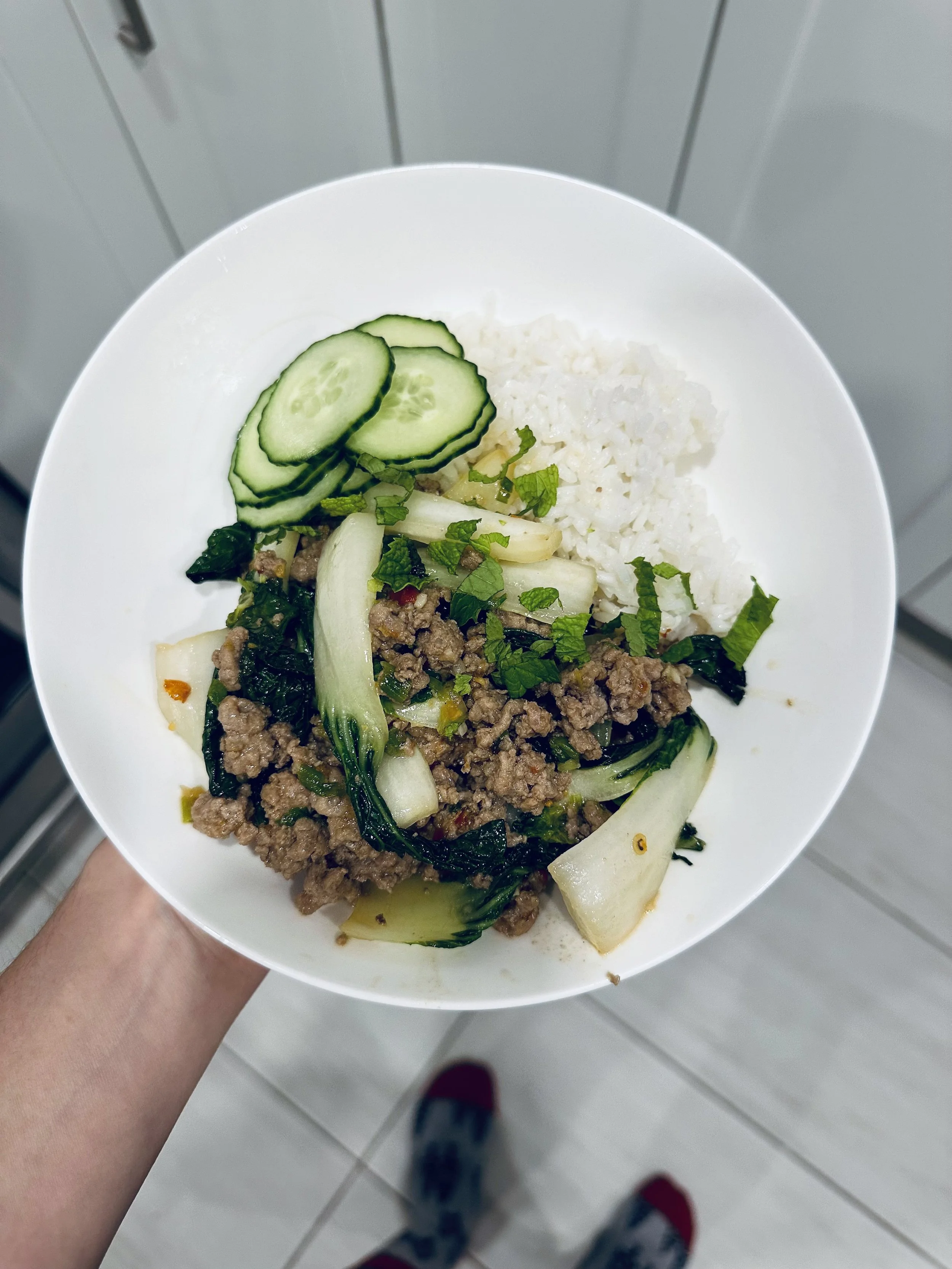
A Simple Core 4 Example:

Breakfast:

  • Scrambled eggs (protein)

  • Whole grain toast (carb)

  • Avocado (fat)

  • Berries (colour)

Dinner:

  • Salmon (protein)

  • Rice (carb)

  • Olive oil drizzle (fat)

  • Roasted broccoli + peppers (colour)


The Takeaway

Healthy eating doesn’t need to be complicated.

When you build meals using the Core 4, you naturally support:

  • Blood sugar balance

  • Energy

  • Hormones

  • Digestion

  • Long-term metabolic health

No tracking. No perfection. Just balanced meals, consistently.


If you want a more personalized plan to support your weight, blood sugar, cholesterol or cravings reach out! Or follow me on Instagram for simple, evidence-based nutrition tips.

Fall Sheet Pan Sausage and Veggie Meal

This time of year I love warming bowls and easy meals. This combines the two together as it is a sheet pan meal that mixes fall flavours together while providing a good amount of protein and fibre. You can use any hearty vegetable you want. I just had all these vegetables to use up.

Ingredients:

  • 4-5 Italian chicken (or pork) sausage, chopped into smaller pieces

  • 1 sweet potato (medium or large), peeled and cubed

  • 1-2 cups butternut squash, cubed

  • 1.5 cups cauliflower florets

  • 1 cup baby potatoes, halved

  • 2 small beets, cubed

  • 1 cup Brussels sprouts, sliced in half

  • 2 big handfuls chopped kale

  • goats cheese, to taste

  • 2 tbsp olive oil

  • 1 tsp garlic powder (I only estimated)

  • 1 tsp smoked paprika (or regular paprika)

  • 1/2 tsp dried thyme, oregano or herbs de provence

  • salt and pepper

Directions:

  1. Preheat oven to 425F.

  2. Toss the hard veggies first: In a large bowl, combine sweet potatoes, beets, squash and baby potatoes. Drizzle with 1.5 tbsp olive oil, half the seasoning, salt and pepper. (Tip - keep beets separate if preferred as they can tint other veggies slightly.)

  3. Spread on a parchment-lined sheet pan and roast for 20 minutes.

  4. Add cauliflower, Brussels sprouts and sausage to the pan (or use a second pan and scatter sausage on both). Drizzle with the remaining olive oil and seasoning. Toss lightly to mix.

  5. Return to the oven and roast another 15-20 minutes, until all veggies are tender and caramelized and the sausage is browned.

  6. While cooking, lightly sauté kale with a little olive oil and salt until slightly wilted. OR, massage kale with a little olive oil and salt add to pan out of the oven.

  7. Optional - sprinkle crumbled goat cheese or parsley on top before serving. Yum!

Enjoy!

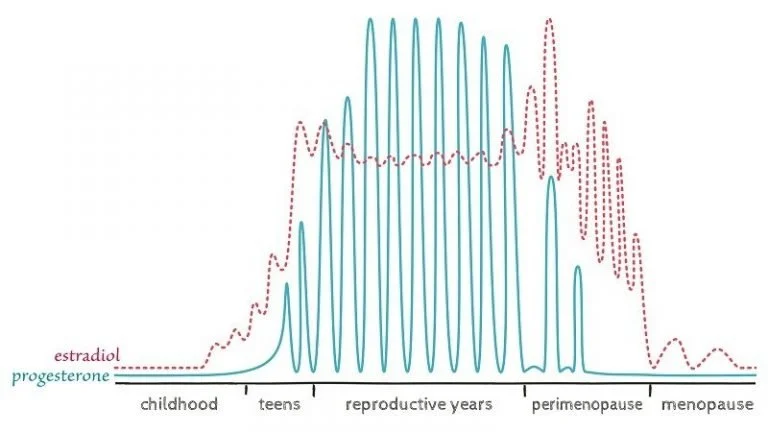
Perimenopause 101 - How to tell you are in it

Diagram from Lara Briden’s Hormone Repair Manual

Perimenopause is a gradual transition that typically begins in a woman's 40s, marking the lead-up to menopause. It's important to note that for women over 45, perimenopause is typically a clinical diagnosis and does not require lab assessment for confirmation. To help you recognize if you're entering this phase, here are some key signs to look out for:

  • Changes in menstrual patterns: Your periods may become irregular, with cycles becoming longer or shorter. You might still have periods, but the consistency and frequency may vary. Often your period becomes shorter before it gets less frequent.

  • New physical symptoms: You may experience hot flashes, night sweats, or changes in your skin and hair. Vulvar and vaginal symptoms can also occur while you're still menstruating. You may also have an exacerbation of pre-existing symptoms such as breast tenderness.

  • Insomnia and sleep changes: As your hormones fluctuate your sensitivity to that could cause worsening of sleep, either a few days before your period or throughout the cycle.

  • Mood changes: Some women notice shifts in their emotional state, including increased irritability or mood swings. It's important to note that while mood changes are common, severe depression should be addressed with a healthcare provider.

To better understand and manage your perimenopause journey:

  • Track your symptoms: Keep a record of your menstrual cycles and any new symptoms you experience. This can help you identify patterns and provide valuable information to your healthcare provider.

  • Get appropriate testing: Again hormone testing does not diagnose perimenopause however getting baselines of B12, ferritin, liver enzymes, lipid panels can be helpful to assess your overall health and cardiovascular risk (one thing we care about the most!)

  • Consider your family history: Ask your mother about her menopause experience, as there can be genetic similarities. Ask about family history of osteoporosis and cardiovascular disease. These areas of health are important to monitor in women’s health.

  • Seek expert help: Consider seeing a menopause practitioner who specializes in this life stage to get targeted support and avoid misdiagnosis.

Remember, every woman's experience with perimenopause is unique. By staying informed and proactive about your health, you can navigate this transition more smoothly and ensure you receive appropriate care and support.