Food Friday

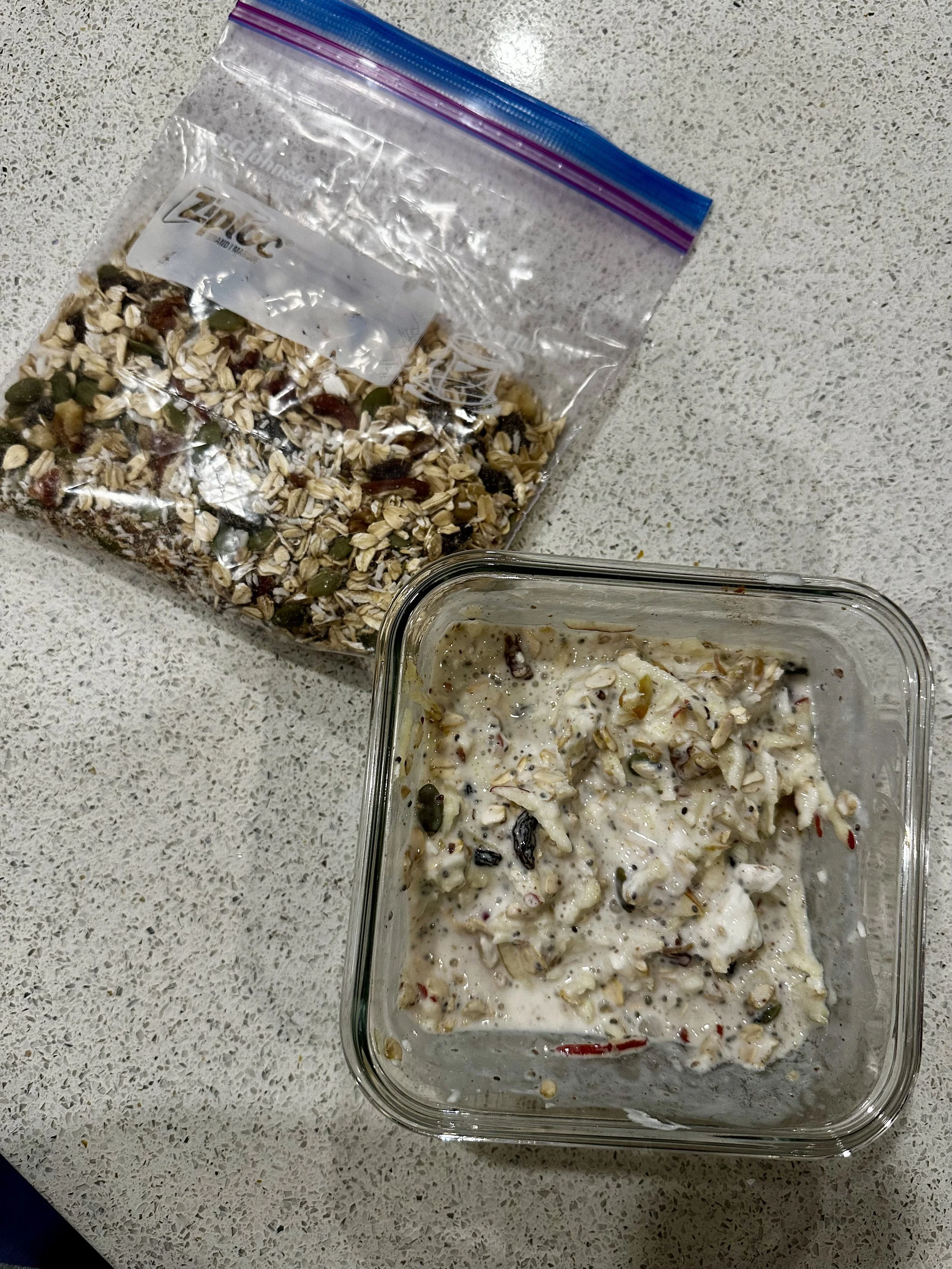
Gut Friendly Bircher Muesli

This has been my favourite breakfast lately. Easy to prepare the night before, great for busy mornings and fibre filled to support gut health. While we have been bombarded with “high protein” foods lately, fibre is just as, or if not MORE, important for overall health. We need soluble and insoluble to support proper gut health, regular bowel movements, lower cholesterol, blood sugar balancing/metabolism support, weight management, hormone support and much more. It does a lot of heavy lifting in our bodies!

Women need 21-30g/day (depending on age - lower end of range as you age)

Men need 28-38g/day (depending on age)

Reminder - add more gradually and drink enough water. Adding more fibre too fast can lead to bloating and harder stools, but that doesn’t mean it is harmful.

I came across this recipe on social media after going down a fibre rabbit hole trying to find some new recipes (@sophiethenutritionist). This can be adjusted as you like with added buckwheat groats, less coconut or different nuts. It is best to prep the full batch once, which will last you 4-5 mornings. This provides a good source of protein AND fibre.

There is so much food noise out there, which can be very confusing. Try sticking to eating whole foods, fueling ourselves properly but not overthinking it. I want you to enjoy your food and see the benefits. I hope you enjoy this recipe as much as I do.

Ingredients:

  • 140g Oats (approximately 1.5 cups)

  • 60g Mixed Nuts, chopped (approximately 1/2 cup) - I like pecans, walnuts, almonds)

  • 50g Pumpkin seeds (approx 1/3 cup)

  • 45g Shredded coconut (approx 1/2 cup)

  • 45g Raisins (approx 1/3 cup)

  • 20g Ground flax seeds (2 tbsp)

  • 20g Chia seeds (2 tbsp)

To make one serving:

  • 1/2 cup Muesli mix

  • 1/2 cup Milk of choice (I use soy milk as I am dairy free and that provides extra protein and calcium)

  • 1/2 Grated apple

  • 1/4 cup Plain greek yogurt

    Let it soak overnight in the fridge. Add more toppings such as cinnamon, psyllium powder, honey or berries to your liking.

Dr. Karen

The Core 4: A Simple Formula for Balanced, Energizing Meals

If you’ve ever felt overwhelmed by nutrition advice, you’re not alone. Between macros, calories, food rules, and trending diets, eating well can feel complicated and stressful.

That’s why I teach my clients a simple, sustainable framework called The Core 4.

It’s not a diet. It’s not restrictive.

It’s a way to build meals that support your blood sugar, energy, digestion, hormones, and long-term health — without overthinking.

Let’s break it down.


What Is the Core 4?

The Core 4 means including four essential components at every meal:

  1. Protein

  2. Carbohydrate

  3. Fat

  4. Colour (fibre + phytonutrients)

When these four are present, your meal is far more likely to:

  • Keep you full and satisfied longer

  • Prevent blood sugar crashes

  • Reduce cravings

  • Support energy and mood

  • Promote stable metabolism

This is the foundation I use in clinical practice and with those that struggle with cravings, low energy, high blood sugar, weight loss goals and much more!


1. Protein – The Muscle builder & Blood Sugar Anchor

Protein slows digestion, stabilizes blood sugar, and supports muscle, hormones, and immune health.

Examples:

  • Chicken, turkey, beef, fish

  • Eggs

  • Tofu, tempeh, lentils, beans

  • Greek or dairy-free yogurt

Aim for a palm-sized portion at meals.


2. Carbohydrates – Your Brain & Body’s Preferred Fuel

Carbs are not the enemy — they are your primary energy source. The key is choosing whole, fibre-rich carbs and pairing them with protein and fat.

Examples:

  • Rice, quinoa, oats

  • Potatoes, sweet potatoes

  • Whole grain bread, pasta

  • Fruit

Think one cupped hand per meal.


3. Fat – For Hormones, Satiety, and Brain Health

Fat helps you absorb fat-soluble vitamins and keeps you satisfied.

Examples:

  • Olive oil, avocado

  • Nuts, seeds, seed butters

  • Butter, ghee, coconut milk

Aim for a thumb-sized portion.


4. Colour – Fibre, Antioxidants & Gut Support

This is where your vegetables and fruits come in. They provide fibre for digestion and phytonutrients for inflammation, immunity, and hormone balance.

Examples:

  • Leafy greens

  • Bell peppers, carrots, tomatoes

  • Berries, apples

Fill at least half your plate with colour.


What Happens When You Skip One?

Skipping a Core 4 element often leads to:

  • Blood sugar spikes and crashes

  • Energy dips

  • Increased cravings

  • Feeling “snacky” shortly after eating

That’s why you may feel hungry again an hour after toast alone — but not after toast with eggs, avocado, and berries.


A Simple Core 4 Example:

Breakfast:

  • Scrambled eggs (protein)

  • Whole grain toast (carb)

  • Avocado (fat)

  • Berries (colour)

Dinner:

  • Salmon (protein)

  • Rice (carb)

  • Olive oil drizzle (fat)

  • Roasted broccoli + peppers (colour)


The Takeaway

Healthy eating doesn’t need to be complicated.

When you build meals using the Core 4, you naturally support:

  • Blood sugar balance

  • Energy

  • Hormones

  • Digestion

  • Long-term metabolic health

No tracking. No perfection. Just balanced meals, consistently.


If you want a more personalized plan to support your weight, blood sugar, cholesterol or cravings reach out! Or follow me on Instagram for simple, evidence-based nutrition tips.

Fall Sheet Pan Sausage and Veggie Meal

This time of year I love warming bowls and easy meals. This combines the two together as it is a sheet pan meal that mixes fall flavours together while providing a good amount of protein and fibre. You can use any hearty vegetable you want. I just had all these vegetables to use up.

Ingredients:

  • 4-5 Italian chicken (or pork) sausage, chopped into smaller pieces

  • 1 sweet potato (medium or large), peeled and cubed

  • 1-2 cups butternut squash, cubed

  • 1.5 cups cauliflower florets

  • 1 cup baby potatoes, halved

  • 2 small beets, cubed

  • 1 cup Brussels sprouts, sliced in half

  • 2 big handfuls chopped kale

  • goats cheese, to taste

  • 2 tbsp olive oil

  • 1 tsp garlic powder (I only estimated)

  • 1 tsp smoked paprika (or regular paprika)

  • 1/2 tsp dried thyme, oregano or herbs de provence

  • salt and pepper

Directions:

  1. Preheat oven to 425F.

  2. Toss the hard veggies first: In a large bowl, combine sweet potatoes, beets, squash and baby potatoes. Drizzle with 1.5 tbsp olive oil, half the seasoning, salt and pepper. (Tip - keep beets separate if preferred as they can tint other veggies slightly.)

  3. Spread on a parchment-lined sheet pan and roast for 20 minutes.

  4. Add cauliflower, Brussels sprouts and sausage to the pan (or use a second pan and scatter sausage on both). Drizzle with the remaining olive oil and seasoning. Toss lightly to mix.

  5. Return to the oven and roast another 15-20 minutes, until all veggies are tender and caramelized and the sausage is browned.

  6. While cooking, lightly sauté kale with a little olive oil and salt until slightly wilted. OR, massage kale with a little olive oil and salt add to pan out of the oven.

  7. Optional - sprinkle crumbled goat cheese or parsley on top before serving. Yum!

Enjoy!

Chicken Schnitzel & Pesto Pasta

A simple but classic meal and with any vegetable you like on the side. Consider grilled zucchini or peppers, green salad, steamed broccoli or even frozen peas (for the kiddos!). This chicken schnitzel recipe is very easy, delicious and can transform into several different recipes and pesto pasta is just always a hit in our house. Both the chicken and the pesto can be prepped ahead of time if you’d like and both can be eaten separately of course with other sides.

Chicken Schnitzel

I have been really enjoying recipes from Nicole from Simplehomeedit lately and her chicken schnitzel is one I have repeated lately. She has a great video and additional tips on how to make this so I will just share the link to her blog post here. My variation is using gluten free flour and breadcrumbs (when needed) and I usually air fry them and they turn out perfectly. Baking is definitely an option but consider browning the breadcrumbs first for that classic golden look. I avoid frying to avoid more mess. I have batched prepped these as well for the freezer when I have fresh chicken breast. That way I can just pull from the freezer and cook. These are also delicious in a chicken sandwich with simple romaine or iceburg lettuce and mayo or a little of the pesto below with tomato. Yum!

Recipe Here - Chicken Schnitzel


Pesto Pasta

Caro Chambers (from What to Cook When You Don’t Feel Like Cooking - cookbook or substack) is someone I get food inspiration from as well and her write up about an easy pesto formula was great. My go tos for pesto are basil, walnuts or hemp hearts and parmesan cheese. I have liked this formula better than my original pesto pasta recipe and I use my fresh basil growing on my deck.

My usual variation:

  • 2 cups basil (or 1.5 cups basil + 1/2 cup parsley)

  • 1/2 cup walnuts (or pine nuts if you can find them or hemp hearts)

  • 1/2 cup grated parmesan cheese

  • 1/2 cup extra virgin olive oil

  • 2 tbsp lemon juice

Blend all ingredients in a small food processor like this (adding oil slowly while blending if possible). Taste and add salt if preferred.

Mix a few tablespoons with cooked pasta (gluten free if needed). You don’t need too much pesto. Rotini is my preferred pasta for pesto in order to grab the pesto better. Serve warm or cold. Top with sliced chicken schnitzel or chicken on the side. Or you could mix in slightly cooked asparagus, peas or broccoli.


I hope you enjoy these recipes as much as we do!

Dr. Karen