
Digestive Health

Do I have a Food Sensitivity? Is it an issue and how to test.

red+rover.jpg

Since I see a lot of digestive issues in my practice I find that food sensitivities are something worth exploring in many. They are quite common and can lead to a variety of different health concerns from digestive complaints, to skin issues such as eczema or psoriasis, to fatigue and joint pain. They are different from severe food allergies, such as an anaphylactic reaction to peanuts that occurs immediately, as they are a more delayed reaction. Food sensitivity symptoms can take up to 72 hours to appear after eating, so a low-grade food sensitivity can be hard to spot. The more severe a sensitivity the quicker and/or more severe you notice the symptom.

What causes food sensitivities?

When we eat foods we are sensitive to it causes the digestive track lining to become inflamed and small “breaks” in the lining occur allowing partially digested food particles to “leak” into your bloodstream, where your immune system sees them as invaders. Your body then produces antibodies (IgG antibodies) which circulate and attach to the food particle. When your body cannot eliminate the antigen-antibody complexes quickly, your immune system mounts a larger response leading to symptoms of chronic inflammation. The more of this food you eat, a higher level of inflammation can occur. So not only can you suffer from local digestive symptoms, it can then cause systemic inflammation.

Damage to the intestinal lining (aka leaky gut) can be caused by several things other than a main food sensitivity, such as gluten. This could be medications including PPIs, antibiotics which disrupt the normal flora in the intestine, overgrowth of other bacteria such as yeast or Candida, other invading bacteria, and high stress causing lower levels of digestive enzymes and blood circulation to the gut.

How do you test for food sensitivities?

The gold standard for food sensitivity testing is an elimination diet. Meaning, you eliminate all the common foods sensitivities such as gluten, eggs, dairy, sugar etc, for 3-4 weeks then reintroduce these foods back in one at a time to investigate what, if any, reaction you have to that individual food. It may be different for different foods, for example, cramping and diarrhea from dairy and bloating and fatigue from gluten.

Another way to test food sensitivities that I do often in my practice is a blood IgG test, testing 96 common food sensitivities with a simple blood prick test. The test is measuring the amount of IgG antigen-antibody complexes produced when your blood is exposed to that food. The higher the level, the worse the sensitivity. I have seen big improvements in patients health when they identify and eliminate their food sensitivities.

Do you have to eliminate foods forever?

Now my goal is never to limit someones diet even more longterm, so I interpret a test result a couple ways.

There may be 1-5 foods that are high on the list and these are generally the true sensitivities, ie - contribute to the leaky gut picture. These foods would be eliminated either longterm or for several months while we heal the gut and address any other contributing factors.

If many foods sensitivities come up, some in moderate levels, it proves there is a leaky gut and systematic inflammation. I advise to limit these foods for the time being and stress the importance of gut healing using probiotics and soothing and healing herbs for the gut. We also may need to explore stress levels, and other systemic bacterial overgrowth contributing to inflammation.

Once we complete a gut healing protocol it is easier to introduce certain foods back into your diet.

Do you have symptoms of a food sensitivity?

If you are struggling with digestive concerns, skin issues, fatigue, joint pain, depression even, and haven’t explored triggers from your diet, I would suggest reaching out to an ND like myself to explore this possibility. As I mentioned above, there may be more to the story that just a food trigger but it commonly has a component in someone health concerns.

Note - If you are noticing digestive concerns triggered by higher fibre foods or the lowFODMAP diet has been suggested and is helpful to you, that may be a different issue all together that we can definitely explore as well.

In health & happiness,

Dr. Karen
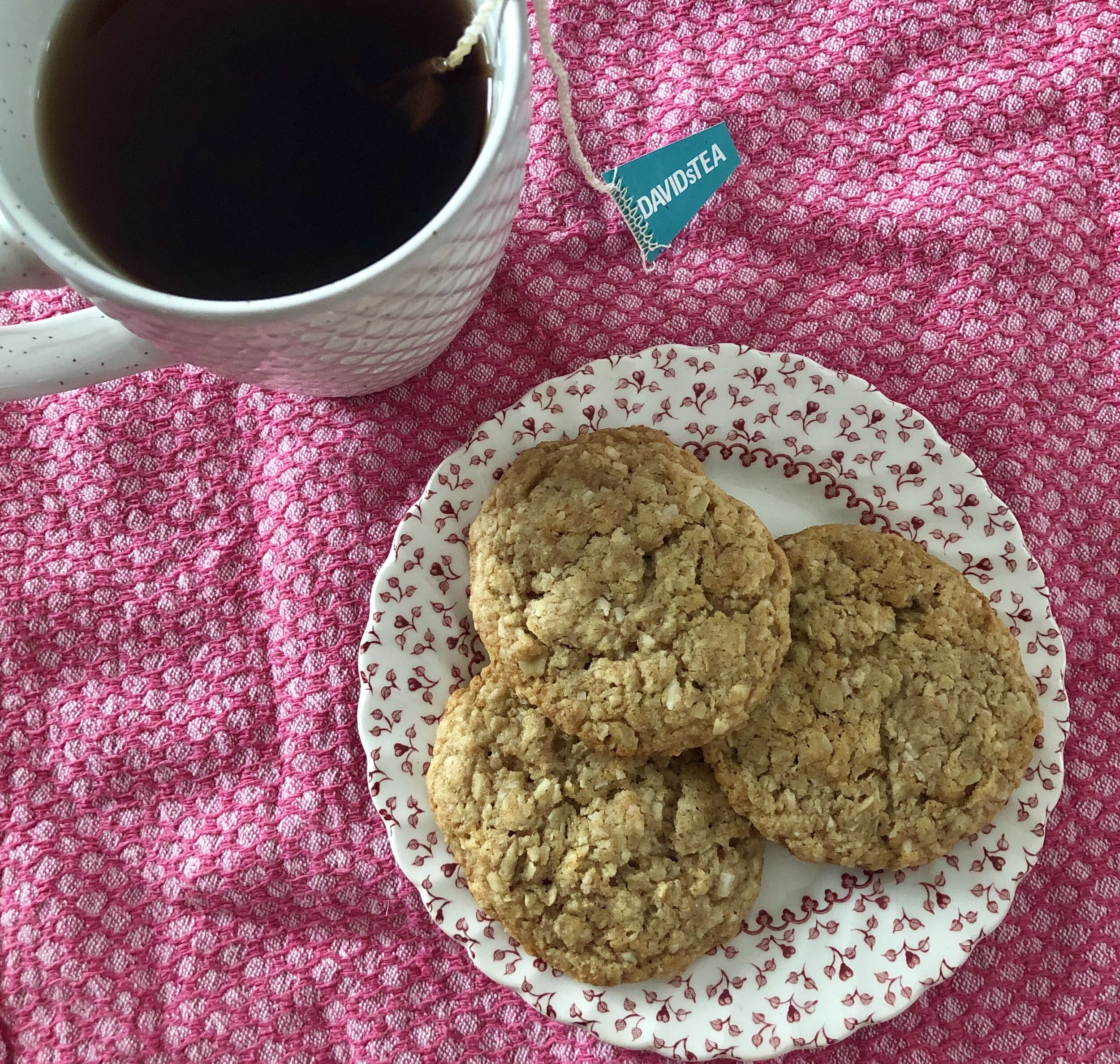
Food Friday: Old-Fashioned Oatmeal Coconut Cookies

IMG_1661 2.jpg

Don't get me wrong I love chocolate in my cookies but these are a great alternative for a "healthy" treat at tea time. Ok, not so healthy with 1 cup of sugar in them, but the oats are a great source of fibre for gut health from their beta-glucans. Beta-glucans are prebiotics that are fermented by the good bugs in our gut. In that fermentation process, the bugs produce short chain fatty acids, such as butyrate, which provides energy for the intestinal cells. Beta-glucans also increase the viscosity of our food moving through the intestines, allowing more time for nutrient digestion and absorption.

On to the recipe!

Ingredients:

  • 1 cup butter (or vegan butter in my case)

  • 1/2 cup coconut sugar (or whatever you have at this point!)

  • 1/2 cup lightly packed brown sugar

  • 1 egg

  • 1 tsp vanilla

  • 1 cup shredded unsweetened coconut

  • 1 1/2 cups gluten free flour (or spelt flour - both are delicious)

  • 1 1/2 cups oats (large flake or quick)

  • 1 tsp baking powder

  • 1 tsp baking soda

  • 1/4 tsp salt

Directions:

  1. Preheat the oven to 375F and line a baking sheet with parchment paper.

  2. Beat the butter, sugar & brown sugar until light and fluffy, around 1-2 minutes (By hand like me or with electric mixer). Add the egg & vanilla and mix/beat again to combine. Add the remaining ingredients & mix until well combined and the mixture sticks together, around 1 minute.

  3. Scoop about 2 tbsp of dough into a ball, rolling with your hands (or use an ice cream scoop), and place them evenly spaced on the prepared baking sheet (work in batches). Press down lightly with your hands to slightly flatten the cookies. Bake until lightly golden brown around the edges, 8-10 minutes. Remove from the oven, transfer the cookies to a cooling rack, and repeat with the remaining dough.

  4. Enjoy!

In health & happiness,

Dr. Karen

(Recipe adapted from fraicheliving.com)

Constipation - What moves your bowels?

relax+with+coffee.jpg

Regular bowels are an important sign of good health. Our bowels are a primary function of elimination and detox. When this is backed up, we start to use secondary organs of elimination such as your skin, or lungs...which is not ideal. ⠀

Do you suffer from constipation? Check out the bristol stool chart if you haven't seen it before. Constipation could mean daily hard to pass stool, or not going for several days. ⠀

Why are you constipated?

  1. There could be an imbalance of bacteria in your gut, aka SIBO, or yeast overgrowth.

  2. You could have stagnation of bile from the liver/gallbladder, which is very important to stimulate bowels. ⠀

  3. You could have a low fibre diet (but this gets quite complicated for those who have experienced constipation for awhile - due to point #1 typically). ⠀

  4. You are not stimulating movement of bowels by moving your whole body. Exercise and twists are key here. ⠀

  5. You are STRESSED! If our body is stressed our muscles tighten, including our digestive tract.

What moves our bowels?

1. Get into a routine - We detox during the night for the most part, since our body is at rest, so the morning is when the cycle should be completed, aka a bowel movement. If you wake at the same time each morning, after a good night sleep, your body should start getting into a rhythm and you shouldn’t need extra support. Try it!

2. Try extra support - Try a mug of warm water with lemon. It helps to stimulate liver detox and the warm water gets your intestines warmed up (like a warm up before a big run). Your morning coffee may do the trick as well since it is bitter. Bitters stimulate stomach acid, enzymes and bile secretion, all essential for proper digestion and bowels.

3. Exercise and twist - The simple twist I’m doing above is one way to stimulate the bowels. It’s like wringing out a towel and moves things through. Exercise gets lymph moving, helpful for detox.

4. Hydration - The bowels absorb water to bulk up the stool. This then creates a signal to stimulate a bowel movement. Hydrate with lots of water throughout the day (ideally not ice water, and not just during meals!)

5. Get rid of bad bacteria - Methanobacteria are among those typically high with constipation. Bifido bacteria tend to be low with constipation. These are only 2 patterns I see in practice as it depends on the individual. We ultimately need to eliminate an overgrowth with antimicrobial herbs and a specific diet, then increase the beneficial bugs with supplements or food.

6. Stimulate bile flow - Bile is crucial for proper bowel stimulation. If it is trickling out too often and irritating bowels it can cause diarrhea, and if it is stagnant in the gallbladder (or liver if you don’t have a gallbladder) constipation tends to happen. Simple diet hacks, fibre, cholagogue herbs, and nutrients such as lecithin, and phosphatidylcholine all help to stimulate bile. Cholagogue herbs include milk thistle, burdock, dandelion or artichoke.

7. Relax - I know this is easier said that done but this is key! Deep belly breathing goes a long way to stimulate the vagus nerve ultimately stimulating your bowels.

Questions about constipation? Let me know!

In health & happiness,

Dr. Karen

Estrobolome - The Gut-Hormone Connection

women.jpg

Improving your digestion goes beyond keeping your gut happy. It is connected to a number of different “systems” in our body, one being your hormones, estrogen in particular. When this isn’t in balance it can affect mood, weight, cycle, libido, acne and even bone health. 

What is the Estrobolome?

The gut microbiome is the collection of bacteria, both good and bad, in the digestive system. Ideally there should be no imbalance in the bacteria, called a dysbiosis, but due to diet, antibiotics, stress, or environmental exposure it is common for an imbalance to occur. 

Among many roles, the gut microbiome plays a crucial role in regulating circulating estrogen levels. Specific microbes in the microbiome, called the estrobolome, specifically do this. The microbes in the estrobolome produce an enzyme called beta-glucuronidase, which deconjugates estrogens into their active forms. This increases estrogens that are reabsorbs and capable of binding to estrogen receptors in the body and influencing those hormonal physiological processes. This process is known as phase 3 estrogen detox and when there is the right amount of beta-glucuronidase, estrogen homeostasis is maintained. When dysbiosis occurs, the estrobolome up-regulates or down-regulates beta-glucuronidase leading to a deficiency or excess of estrogen in the body. I most commonly see an estrogen excess. 

Common signs of excess estrogen which can be influenced by estrobolome are:

  • bloating, especially before your period

  • irritability 

  • acne

  • breast tenderness

  • heavy periods

  • headaches or migraines 

  • PCOS picture 

Issues with deficient estrogens post-menopausal influenced by the estrobolome are:

  • increased risk of osteoporosis

  • increased risk of cardiovascular disease 

  • increase risk of obesity 

What affects the estrobolome?

Anything that disrupt the gut microbiome typically affects the estrobolome as well. 

  • Poor diet and lifestyle are the most common triggers for dysbiosis. Certain bacteria feed on certain food we eat (sugar and gluten as common examples), grow and in tern tell the brain to eat more of that food, causing an overgrowth. Studies have shown that a shift in the diet can induce microbial shifts within 24 hours. Focus on organic food when you can, cruciferous vegetables such as broccoli and brussels sprouts and fibre. 

  • Antibiotics and birth control pills both have been found to alter the microbiome and estrogen levels, leading us to believe it is affecting the estrobolome. 

  • A broad spectrum probiotic can influence the microbiome to shift positively. Antimicrobial herbs may be effective at eliminate an overgrowth. Talk to an ND like me to discuss if these are advised for you. 

  • Calcium-D-Glucurate is a supplement that is a beta-glucuronidase inhibitor. This allows estrogen to remain conjugated, in its inactive form, to be safely eliminated from the body. This is very handy for someone with known estrogen excess. 

This gut-hormone connection proves to me that gut health is again at the root of many health concerns. We don’t want to forget proper liver support or hormone support with certain herbs, but it is important to not skip the gut! 

In health & happiness,

Dr. Karen