IBS - It's Not All In Your Head

April is IBS Awareness Month, and there's no better time to shed light on one of the most misunderstood digestive conditions affecting millions of people worldwide. If you've ever experienced unexplained abdominal pain, bloating, gas, diarrhea, or constipation, you're not alone — and more importantly, there are answers.

My personal experience with IBS is one of the reasons I went into Naturopathic Medicine - IBS has been part of my picture for decades. That personal connection has made me more passionate about treating others and understanding the details - what it is, what causes it and how to treat and/or manage it.

What Is IBS?

Irritable Bowel Syndrome (IBS) is a common condition that affects the digestive system. Symptoms can range from loose stools and constipation to bloating, belching, and gas. Many people find that their symptoms are triggered by eating, stress, or uncertainty about their daily routine. The impact can be significant — disrupting sleep, limiting social activities, “picky eating”, affecting work performance, and causing embarrassment or frustration. It is an umbrella term - meaning there are many different causes. My goal is to dig deeper.

The Role of Disorders of Gut-Brain Interaction (DGBI)

One of the most important — and often overlooked — causes of IBS-like symptoms falls under a category called Disorders of Gut-Brain Interaction (DGBI). These are conditions where the communication between your brain and gut becomes disrupted. In adults, there are 22 separate DGBI conditions, including IBS, functional bloating and distention, dyspepsia, and functional heartburn.

Here are some of the key mechanisms behind DGBI that can contribute to IBS symptoms:

  • Sensitive Gut Nerves– The nerves in your gut may become overly sensitive, causing pain or discomfort from what would otherwise be normal digestive processes.

  • Altered Gut Movement– The muscles in your gut may move food too quickly or too slowly, resulting in diarrhea or constipation.

  • Disrupted Gut-Brain Communication– Signals between your gut and brain can be misinterpreted, causing symptoms even when there is no structural problem present.

  • Microbiome Imbalance– An imbalance in the gut's bacterial environment can contribute to a wide range of digestive symptoms.

  • Immune System Alterations– Low-level immune activation can keep the gut in a heightened state of alertness, perpetuating symptoms. I can see this in lab tests.

  • Stress and Anxiety– Due to the close connection between the brain and gut, emotional stress and anxiety can significantly worsen IBS symptoms.

It's Not "Just in Your Head"

A common misconception about IBS and DGBI is that it's purely psychological. This is simply not true. While the brain and gut are closely connected, the symptoms are very real and require proper management. These are genuine gut conditions that can be influenced by stress and mental health — but they are not caused solely by them.

Other Contributing Factors to IBS

Beyond DGBI, several other factors can play a role in IBS. Some include:

  • SIBO (Small Intestinal Bacterial Overgrowth)– Research suggests a strong overlap between IBS and SIBO, making it an important condition to investigate and rule out.

  • Hormonal Fluctuations– For menstruating individuals, conditions like PMS can aggravate gut symptoms significantly.

  • Mental Health– Anxiety and stress are major contributors to gut symptoms and should never be overlooked in treatment planning.

What Can You Do?

If you suspect IBS, it's important to work with a qualified healthcare provider to:

  • Rule out other conditions such as SIBO, or endometriosis

  • Assess mental health factors like anxiety

  • Review current supplements and medications

  • Explore evidence-based treatments tailored to your unique symptom profile

Final Thoughts

IBS is definitely not a one-size-fits-all condition. Each person's experience is unique, and the underlying causes can vary widely — from microbiome imbalances to gut-brain communication issues to hormonal triggers. This IBS Awareness Month, if you're struggling with IBS symptoms, reach out to a healthcare professional. You deserve answers — and relief.

Dr. Karen

Understanding Diverticulosis vs. Diverticulitis

What you need to know about prevention, risks, and treatment

A diet containing fibre diet is important for prevention

If you’ve ever been told you have “diverticula” or experienced a sudden bout of unexplained abdominal pain, you may have come across the terms diverticulosis and diverticulitis. While they sound similar, they are actually quite different—and understanding that difference is key to both prevention and treatment.


Diverticulosis vs. Diverticulitis: What’s the Difference?

Diverticulosis refers to the presence of small pouches (called diverticula) that form in the wall of the colon. These pouches are quite common, especially as we age, and many people have them without ever knowing.

Diverticulitis, on the other hand, occurs when one or more of those pouches become inflamed or infected. This is when symptoms appear—and when medical attention is often needed.

A helpful way to remember:

• “-osis” = presence of pouches (often silent)

• “-itis” = inflammation (symptomatic and sometimes serious)


How Common Is It?

Diverticular disease becomes more common with age and is uncommon under age 40, though it can still occur. In fact, diverticulitis is now considered the third most common gastrointestinal diagnosis requiring hospital admission—highlighting how significant it can become when it flares.


Why You Might Not Know You Have It

Most people with diverticulosis feel completely fine. The pouches themselves don’t usually cause symptoms, which means many cases are only discovered incidentally—often during testing for something else.

It’s usually only when inflammation develops (diverticulitis) that people notice:

• Lower abdominal pain (often left-sided)

• Fever

• Bloating

• Changes in bowel habits (constipation or diarrhea)


What Causes It? (And Risk Factors)

There’s no single cause, but several factors increase risk:

• Low fibre intake (leading to increased pressure in the colon and constipation)

• Poor colonic motility, or bowel tone (often due to Chronic constipation)

• Sedentary lifestyle

• Aging

• Obesity

• Smoking

• Low vitamin D levels (emerging research suggests a link)

  • Genetics (something we can’t change)

These factors can contribute to increased pressure in the colon, making pouch formation more likely—and potentially increasing the risk of inflammation later on.


How Is It Diagnosed?

Diverticulosis

• Often found during a colonoscopy, typically when screening for other concerns (like colorectal cancer)

Diverticulitis

• Best diagnosed with a CT scan, which is the preferred imaging method during an acute flare

• Colonoscopy is not done during an active flare due to risk of complications


Prevention: What You Can Do

The good news? Many cases of diverticulitis are preventable.

Focus on:

1. Fibre Intake

Aim for a gradual increase in fibre from whole foods:

• Vegetables

• Fruit

• Legumes

• Whole grains

• Seeds (yes—modern evidence shows seeds are safe)

  • psyllium husk

2. Regular Bowel Movements

Avoid straining and constipation:

• Stay hydrated

• Consider magnesium or fibre supplements if needed

3. Exercise

Regular movement helps support healthy bowel function and reduces pressure in the colon.

4. Vitamin D

Low levels have been associated with increased risk of diverticulitis. Consider testing and supplementing if needed.


What Happens During a Flare?

If diverticulitis develops, symptoms can range from mild to severe.

Conventional Treatment May Include:

• Antibiotics (only in some cases)

• Temporary dietary changes (low fibre during acute phase)

• Pain management - Naturopathic care can help sooth here and decrease inflammation

• Hospitalization in more severe cases


Supportive/Naturopathic Approach:

During recovery (not the acute phase), focus on:

• Gradually reintroducing fibre

• Gut healing support (e.g., probiotics, anti-inflammatory nutrition)

• Addressing underlying constipation or digestive patterns - TREAT THE CAUSE! Is it poor motility, SIBO, dysbiosis…


When to Seek Medical Care

Seek prompt care if you experience:

• Persistent or severe abdominal pain

• Fever

• Vomiting

• Inability to pass stool or gas

These may indicate a more serious flare requiring immediate attention.

⸻

Final Thoughts

Diverticulosis is common and often harmless—but diverticulitis is a different story. The key is prevention: supporting healthy digestion, reducing inflammation, and maintaining regular bowel habits.

If you’ve been diagnosed—or want to reduce your risk—taking a proactive approach can make a significant difference.

Dr. Karen

Perineural Injection Therapy: A New Tool for Chronic Pain Management at Symmetry Wellness Centre

I'm excited to share that Dr. Paige Weatherbee-Sakr has expanded her therapeutic offerings to include Perineural Injection Therapy (PIT)—a specialized treatment approach for chronic nerve-related pain. As naturopathic physicians, we're always seeking evidence-informed therapies that address the root causes of our patients' concerns while supporting the body's inherent healing capacity. PIT represents an excellent addition to the comprehensive care we provide at Symmetry.

Understanding Neurogenic Inflammation

When we think about pain, we often focus on tissue damage—injured muscles, inflamed joints, damaged ligaments. And certainly, addressing these tissue-level concerns is crucial. However, there's another important component to chronic pain that we sometimes overlook: the nervous system's own inflammatory response.

When peripheral nerves are compressed, stretched, or injured, they don't just passively transmit pain signals—they actively generate inflammation themselves. This neurogenic inflammation involves the release of neuropeptides like substance P, which perpetuate pain signaling and maintain inflammatory processes even after the original tissue injury has healed.

This is why some patients continue experiencing pain long after we'd expect tissues to have recovered, and why that pain often has a distinctive nerve-related quality: burning, tingling, electrical sensations, or hypersensitivity that seems disproportionate to findings on physical examination.

What is Perineural Injection Therapy?

Perineural Injection Therapy involves the subcutaneous injection of a dilute 2% procaine solution immediately adjacent to superficial nerves that are inflamed or irritated. The mechanism isn't fully understood, but research suggests that the procaine solution may help restore normal nerve function by addressing neurogenic inflammation and supporting nerve healing.

The treatment is quite gentle—injections are shallow, using small volumes just under the skin along the pathway of affected nerves. It's not a deep tissue injection, and it's generally well-tolerated with minimal discomfort.

When Might PIT Be Appropriate?

From a naturopathic perspective, PIT is most valuable when we've addressed foundational concerns—nutrition, inflammation, digestive health, stress—but patients still experience persistent neuropathic pain that limits their function and quality of life.

PIT may help patients experiencing:

  • Chronic pain with neuropathic characteristics (burning, tingling, shooting, electrical quality)

  • Pain that follows specific nerve distributions

  • Superficial pain caused by nerve compression from underlying structural issues

  • Chronic headache patterns involving nerve irritation

  • Pain that has persisted despite other appropriate interventions

It's particularly effective for conditions where we can identify specific superficial nerves that are contributing to the pain pattern—occipital neuralgia, certain types of chronic neck and shoulder pain, lateral hip pain involving the lateral femoral cutaneous nerve, and various other presentations where nerve involvement is clear.

The Naturopathic Principle: Treat the Cause

It's worth noting that PIT doesn't replace our commitment to identifying and addressing root causes. If nerve inflammation is occurring, we still need to ask why. Is there structural compression that needs osteopathic or chiropractic attention? Is there systemic inflammation that requires nutritional intervention? Are there biomechanical issues that need physiotherapy? Is there fascial restriction that massage therapy could address?

PIT supports the nerve's healing while we continue addressing these underlying factors. It's not a standalone solution but rather one component of comprehensive care.

Clinical Considerations

Treatment protocols are individualized, but typically involve a series of sessions—often 4 - 8 treatments initially, though some patients respond more quickly. Response is usually gradual, with incremental improvement over several weeks as neurogenic inflammation reduces and normal nerve function is restored.

PIT works alongside other treatments. Patients continue with their physiotherapy, osteopathic care, acupuncture, massage, and naturopathic protocols. This collaborative approach is what creates the best outcomes.

Is PIT Right for You?

Dr. Weatherbee-Sakr is offering free consultations to help patients understand whether this therapy might be appropriate for your specific situation. As always, treatment decisions are made collaboratively, with full consideration of each person's unique health picture, goals, and values.

Moving Forward

The addition of Perineural Injection Therapy strengthens the already comprehensive toolkit available at Symmetry Wellness Centre. It represents another way we can support those dealing with complex chronic conditions—combining cutting-edge therapeutic approaches with the time-tested naturopathic principles of treating the whole person and supporting the body's healing capacity.

If you have questions about PIT or want to discuss whether it might benefit you, please reach out to Dr. Weatherbee-Sakr or book a free consultation.

How Your Menstrual Cycle Changes in Perimenopause - and Why tracking It Matters

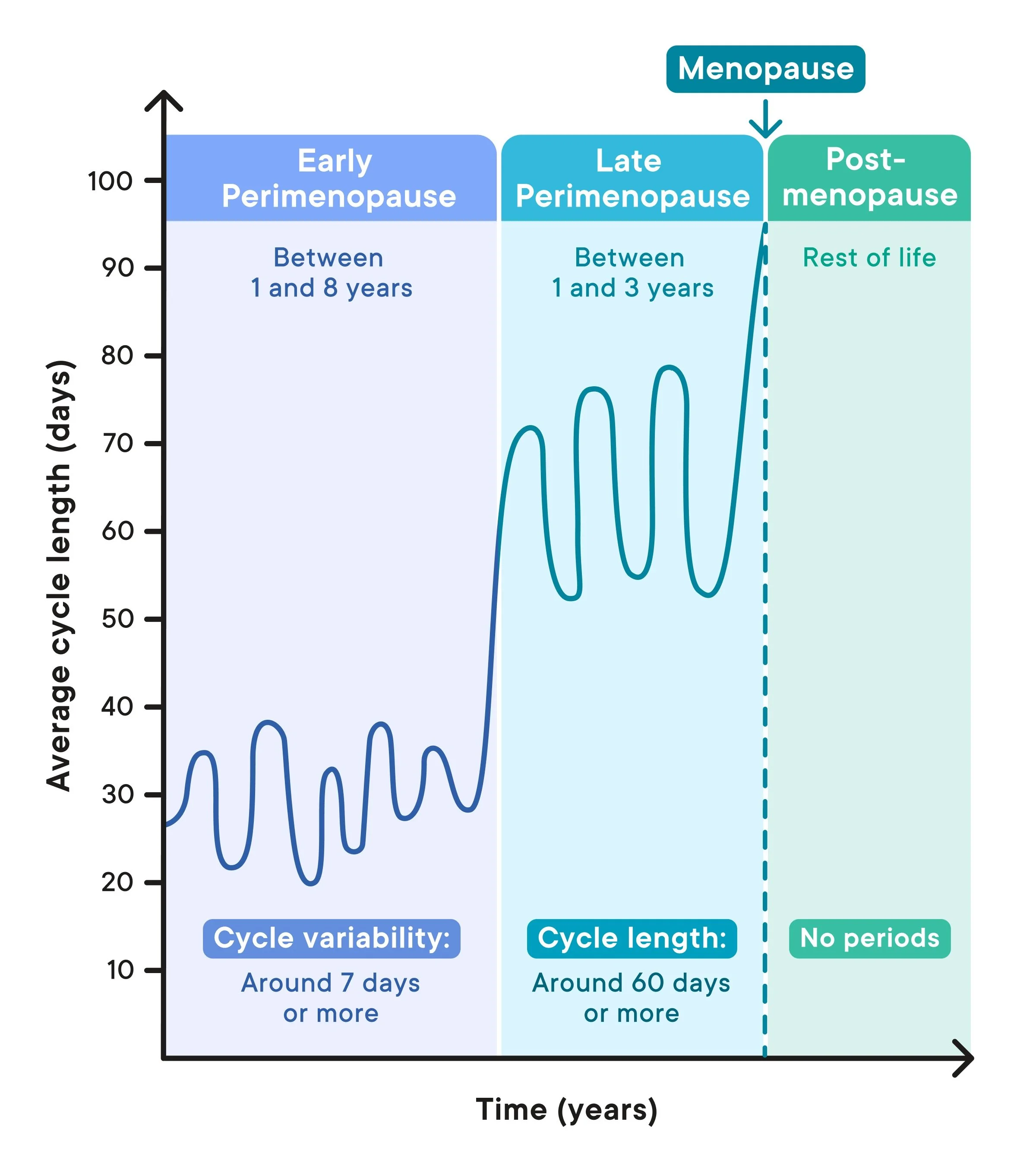
Perimenopause is not a single moment—it’s a multi-year hormonal transition that unfolds in stages. One of the earliest and most reliable clues that you’ve entered this phase is a change in your menstrual cycle.

www.helloclue.com


Understanding how your cycle is changing can help you:

  • Identify where you are in the menopausal transition

  • Understand the hormonal patterns driving your symptoms

  • Choose the most appropriate treatment strategy for your body

  • Decide whether testing may be helpful (especially if you don’t bleed due to an IUD)

Let’s break down what’s normal, what’s not, and how tracking can guide care.


The First Sign of Perimenopause: A Changing Cycle

In your reproductive years, your cycle is typically predictable—often within a 2–4 day window each month.

In early perimenopause, the defining change is:

A cycle that shifts by 7 days or more—earlier or later—compared to your usual pattern.

This may look like:

  • A period arriving 7–10 days earlier than expected

  • A cycle that suddenly stretches 1–2 weeks longer

  • Month-to-month unpredictability

This is often driven by inconsistent ovulation, fluctuating estrogen, and rising progesterone deficiency.


Later Perimenopause: Longer Gaps Between Periods

As you move further into the menopausal transition, the ovaries begin to respond less consistently to brain signals.

In later-stage perimenopause (which may last 1–3 years), you may notice:

  • Skipped periods

  • Cycles that stretch beyond 60 days without bleeding

  • Heavier or prolonged bleeding when periods do return

At this stage, hormone fluctuations are more extreme, and symptoms such as hot flashes, sleep disruption, anxiety, and heavy bleeding often intensify.


Why Cycle Tracking Is So Powerful

Tracking your cycle is not just about dates—it helps determine:

1.  Where you are in the transition

  • Shorter or variable cycles → earlier perimenopause

  • Long gaps (>60 days) → later perimenopause

2.  Which treatment options may be most supportive

For example:

  • Heavy + more frequent periods
    → often seen in early perimenopause
    → a hormonal IUD may be a helpful option if blood loss is leading to other issues and can’t be controlled naturally - ie. anemia!

  • Heavy + infrequent periods
    → often seen in later perimenopause
    → an IUD may not be the best fit if the heaviest is infrequent and menopause is now expected in 1-3 years version who knows how many years!
    → other hormone or non-hormonal strategies may be more appropriate


Without tracking, these patterns are easy to miss—and treatment choices may not match your true hormonal stage.


What If You Don’t Get a Period Because of an IUD?

If you have a hormonal IUD and no longer bleed, cycle tracking isn’t possible—but this is when lab testing can help.

FSH Testing in Perimenopause:

FSH (follicle-stimulating hormone) rises as the ovaries become less responsive. In late-stage perimenopause and menopause:

  • FSH levels are often consistently above 25 IU/L

To confirm a menopausal transition when cycles are absent:

  • Two FSH levels >25 IU/L

  • Drawn at least 3 months apart

This can help determine:

  • Whether you are still in perimenopause

  • Whether you may be transitioning into menopause

  • Which therapies are safest and most appropriate


The Takeaway

Your cycle is one of your most valuable hormonal data points.

Whether you’re:

  • Noticing unexpected changes

  • Skipping periods

  • Bleeding more heavily

  • Or no longer bleeding due to an IUD

Tracking (or testing when needed) allows us to:

  • Identify your stage

  • Understand your symptoms

  • And personalize your treatment plan


Perimenopause is not something to “wait out.” With the right insight, it can be navigated with clarity and confidence.