Food Friday: Skinny Chicken Pot Pie

I realized this was worth posting AFTER we started eating!

I realized this was worth posting AFTER we started eating!

I really like when food is mixed all in one bite. ;) I think it increases the flavour in each bite you take. Things like stews, soups, shepherds pie, and chicken pot pies like this one. The problem for me is that being dairy free and gluten free some of those dinner pies are never an option for me. So inspired by a couple recipes I merged together, this delicious dish is just a lighter version of your typical chicken pot pie but still delicious and comforting. It can be dairy free (if you change up the butter) and gluten free (if you use gf tortillas). The flavours are great, it is pretty easy to make and you don’t feel so stuffed after. Enjoy!

Ingredients:

  • 1 white onion, diced

  • 1 cup carrots, diced

  • 1-2 celery sticks, diced

  • 1 cup mushrooms, diced

  • 1 cup frozen peas

  • 1lb chicken breast (about 1 large breasts), cut into small cubes

  • 1/3 cup butter (sub ghee or dairy free butter if necessary)

  • 1 3/4 cup chicken broth

  • 2/3 cup dairy free milk

  • 3 tbsp cornstarch

  • 1/2 tsp salt

  • pepper

  • 1/2-1 tsp dried rosemary (to taste)

  • 1/2-1 tsp dried thyme (to taste)

  • 2 tortillas

  • paprika, to taste

Directions:

  1. Preheat oven to 425F.

  2. In a medium saucepan, combine chicken, carrots, celery and mushrooms. Add water to cover and boil for 15 minutes. Remove from the pan and drain; set aside. 

  3. Heat a second medium saucepan over medium heat, cook onions in butter until soft and translucent. Stir in cornstarch, salt, pepper, dried rosemary and thyme. Slowly stir in chicken broth and milk. Simmer over medium-low until thick. Remove from heat.

  4. Mix chicken and veggie mixture into gravy mixture until well combined. Poor into a medium casserole dish (the mixture should fill up 3/4 of the pan).

  5. Top with 2 tortillas, covering the top. Sprinkle with paprika (or any other spice blend you’d prefer).

  6. Bake for 25 minutes, until tortillas or slightly golden and crispy and mixture in bubbling. Let cool for 5-10 minutes.

  7. Serve with a green salad and small dinner rolls (if you’d like).

In health & happiness,

Dr. Karen

Food Friday: Tom Kha Gai Soup

IMG_1226.jpg

This recipe is adapted from a recipe out of The Defined Dish Cookbook. I just recently was introduced to her blog and cookbook and love it. They are easy, healthy meals for those nights you don't want something heavy or for those who are following a #Whole30 plan.

Now onto this recipe! This soup is creamy (without the cream, thanks to coconut milk) and full of flavour. It isn't too heavy on the veggies so I make sure to get those in during other meals. It is a great meal if you are sick (think Thai chicken soup, bonus is that the mushrooms are immune boosters), if your digestion is off (coconut milk if a low-FODMAP food, and the soup is low in fibre), or great for a light brothy meal anytime.

Ingredients:

  • 2 tbsp extra virgin olive oil or coconut oil

  • 1/2 cup finely diced shallots

  • Salt & Pepper

  • 2-in piece fresh ginger, grated

  • 2 garlic cloves, minced

  • 2 cans unsweetened full-fat coconut milk

  • 1 cup chicken broth (or bone broth!)

  • 2-3 tbsp fish sauce

  • 8 keffir lime leaves (or 1/2 lime grated)

  • 2 tbsp lime juice

  • 1 tbsp coconut sugar

  • 2 red thai chilis, very thinning sliced

  • 1/4 tsp ground coriander

  • 2 stalks lemongrass (white and light green parts), cut into 2-in pieces

  • 2 lbs boneless, skinless chicken thighs, trimmed and thinly sliced

  • 2 cups thinly sliced mushrooms (button, cremini, shitaki etc)

  • 1/4 cup fresh cilantro leaves, optional (I omit since my other half says its a “vile weed”!)

Directions:

  1. In a large pot of Dutch oven, heat the oil over medium heat. Add the shallots and a pinch of salt and pepper. Cook until the shallots are tender, about 2-3 minutes.

  2. Add the ginger and garlic and cook until fragrant, being careful not to burn, about 1 minute.

  3. Add the coconut milk, chicken/bone broth, fish sauce, keffir lime leaves, lime juice, coconut sugar, chilis and coriander. Stir to combine, then add the lemongrass. Bring the soup to a gentle simmer.

  4. Add the sliced chicken and simmer until the chicken is just cooked through, 6-7 minutes. Add the mushrooms and simmer for another 3 minutes. Stir in the cilantro if using.

  5. Remove from heat and discard the lemongrass and keffir lime leaves, if desired. Top with cilantro (or basil is good) and serve with an extra squeeze of lime. Delicious!

Enjoy!

In health & happiness,

Dr. Karen

Estrobolome - The Gut-Hormone Connection

women.jpg

Improving your digestion goes beyond keeping your gut happy. It is connected to a number of different “systems” in our body, one being your hormones, estrogen in particular. When this isn’t in balance it can affect mood, weight, cycle, libido, acne and even bone health. 

What is the Estrobolome?

The gut microbiome is the collection of bacteria, both good and bad, in the digestive system. Ideally there should be no imbalance in the bacteria, called a dysbiosis, but due to diet, antibiotics, stress, or environmental exposure it is common for an imbalance to occur. 

Among many roles, the gut microbiome plays a crucial role in regulating circulating estrogen levels. Specific microbes in the microbiome, called the estrobolome, specifically do this. The microbes in the estrobolome produce an enzyme called beta-glucuronidase, which deconjugates estrogens into their active forms. This increases estrogens that are reabsorbs and capable of binding to estrogen receptors in the body and influencing those hormonal physiological processes. This process is known as phase 3 estrogen detox and when there is the right amount of beta-glucuronidase, estrogen homeostasis is maintained. When dysbiosis occurs, the estrobolome up-regulates or down-regulates beta-glucuronidase leading to a deficiency or excess of estrogen in the body. I most commonly see an estrogen excess. 

Common signs of excess estrogen which can be influenced by estrobolome are:

  • bloating, especially before your period

  • irritability 

  • acne

  • breast tenderness

  • heavy periods

  • headaches or migraines 

  • PCOS picture 

Issues with deficient estrogens post-menopausal influenced by the estrobolome are:

  • increased risk of osteoporosis

  • increased risk of cardiovascular disease 

  • increase risk of obesity 

What affects the estrobolome?

Anything that disrupt the gut microbiome typically affects the estrobolome as well. 

  • Poor diet and lifestyle are the most common triggers for dysbiosis. Certain bacteria feed on certain food we eat (sugar and gluten as common examples), grow and in tern tell the brain to eat more of that food, causing an overgrowth. Studies have shown that a shift in the diet can induce microbial shifts within 24 hours. Focus on organic food when you can, cruciferous vegetables such as broccoli and brussels sprouts and fibre. 

  • Antibiotics and birth control pills both have been found to alter the microbiome and estrogen levels, leading us to believe it is affecting the estrobolome. 

  • A broad spectrum probiotic can influence the microbiome to shift positively. Antimicrobial herbs may be effective at eliminate an overgrowth. Talk to an ND like me to discuss if these are advised for you. 

  • Calcium-D-Glucurate is a supplement that is a beta-glucuronidase inhibitor. This allows estrogen to remain conjugated, in its inactive form, to be safely eliminated from the body. This is very handy for someone with known estrogen excess. 

This gut-hormone connection proves to me that gut health is again at the root of many health concerns. We don’t want to forget proper liver support or hormone support with certain herbs, but it is important to not skip the gut! 

In health & happiness,

Dr. Karen

SIBO - Test Don't Guess

Small intestinal bacteria overgrowth (SIBO) may be more prevalent than we think. Research shows that 50-84% of IBS patients test positive for SIBO. This is with old testing methods that would show many false positives, therefore my assumption is that it is even more prevalent than we think. All it may take for someone to develop SIBO is a bout of food poisoning! That’s it! For some it is more complicated than that.

I have discussed the main reasons someone may have SIBO in a previous post, but let’s jump right into how you accurately diagnose SIBO. In my practice I ask a lot of questions in the first visit. This is because we can gain a lot of clinical information about what may be going on by just getting all the information. A physical exam, specifically an abdominal exam in these cases, is my next step in gathering information. SIBO has a handful of specific symptoms I am looking for which guide my treatment plan. But SIBO also a handful of symptoms that are unique to the individual and can be systemic, for example joint pain, rosacea, hypothyroidism.

Test Don’t Guess

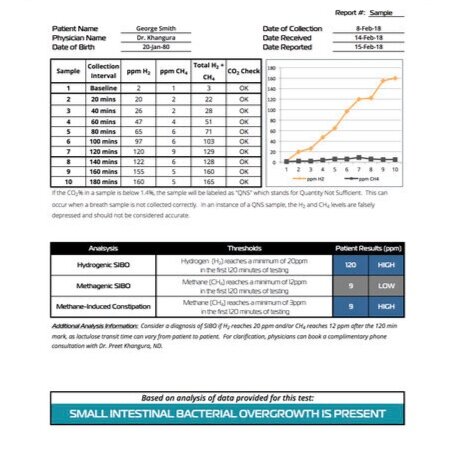
If your symptoms indicate to me that you may have SIBO, before jumping into treatment, it is very helpful to test for it. Not only will this confirm, or deny, a positive result, but it will also guide what type of antimicrobials I’ll use and for how long depending on what the results show. The higher the results, the more rounds of antimicrobials we typically have to do.

SIBO%2BTest%2BReport%2BSAMPLE.jpg

The SIBO breath test is the most accurate non-invasive way to diagnose SIBO right now. Research continues to be done to advance our testing methods. The best option is a breath test that is a 3-hour lactulose breath test looking at both Hydrogen (H2) and methane (CH4) levels. This is the type and amount of gas that is produced if you have SIBO. Hydrogen SIBO typically presents as diarrhea (among other symptoms), and methane SIBO typically presents as constipation. The 3 hour test ensures you are testing the entire length of the small intestine, where only a small amount of bacteria should be, not an overgrowth. Stool testing, which we may do for other GI complaints, is only relevant to the large intestine. There is no accurate test yet for a 3rd type of SIBO, hydrogen sulphide. However, there are patterns on the results and patterns in symptoms that may indicate this type. This is not testing for Candida, however it is common for these to present together.

Ultimately if you test positive for SIBO, I treat it. However, 2/3 of patients have shown to relapse post-treatment. There are number of reasons for this but this is why it is always important to treat the patients and not the condition. I aim to treat the root cause along with the SIBO - if we can. Sometimes this isn’t possible depending on the case, so we do are best. It can also take time, and even different circumstances, for example a less stressful job perhaps, to treat the root. 1/3 of cases are luckily non-recurring and the patients feels better quickly and for good. Phew!

All in all, testing is very helpful to me as a clinician if I suspect a bad case of SIBO. It takes the guesswork out of the treatment and ensures a more accurate and quicker treatment result. Treating SIBO is a team effort but the more information we have the better it can be!

Are you interested in getting tested for SIBO? Let me know!

In health & happiness,

Dr. Karen